Early 20th Century Feminist Art Early 20th Century Female Art
In its most central and simple sense, feminist fine art is the work past artists of any gender, created consciously with the aim of addressing equality of the sexes, and in light of feminist art theory from the 1970s.
The iconic essay by art historian Linda Nochlin sparked a debate that has notwithstanding yet to be fully answered: Why Have In that location Been No Great Women Artists? Nochlin wrote this seminal piece in 1971 and discussed the socioeconomic and inherently sexist practices that had prevented women from excelling in the art world. In response, women around the world began to create piece of work that dealt with the singular female feel, and increasingly began to apply their works of art to challenge the patriarchal systems that had prevented their predecessors from existence seen or heard.
The number of incredible female artists who explore feminist ideas has exponentially increased in the final 50 years, simply at that place remain some who stand up out as accented icons within the motility.
Judy Chicago
No list of feminist artists would be complete without the inclusion of Judy Chicago. Born Judith Sylvia Cohen, Judy Chicago legally inverse her concluding name subsequently her husband's death in 1970. This act in itself identified Chicago as an emancipated, independent woman who embraced her feminist identity.
From this betoken onward, Chicago set out to educate the earth through her fine art. Her oeuvre often incorporates the so-called "sis arts" of craft; such as needlework, and still life, counterbalanced with stereotypical masculine skills such every bit welding and pyrotechnics.
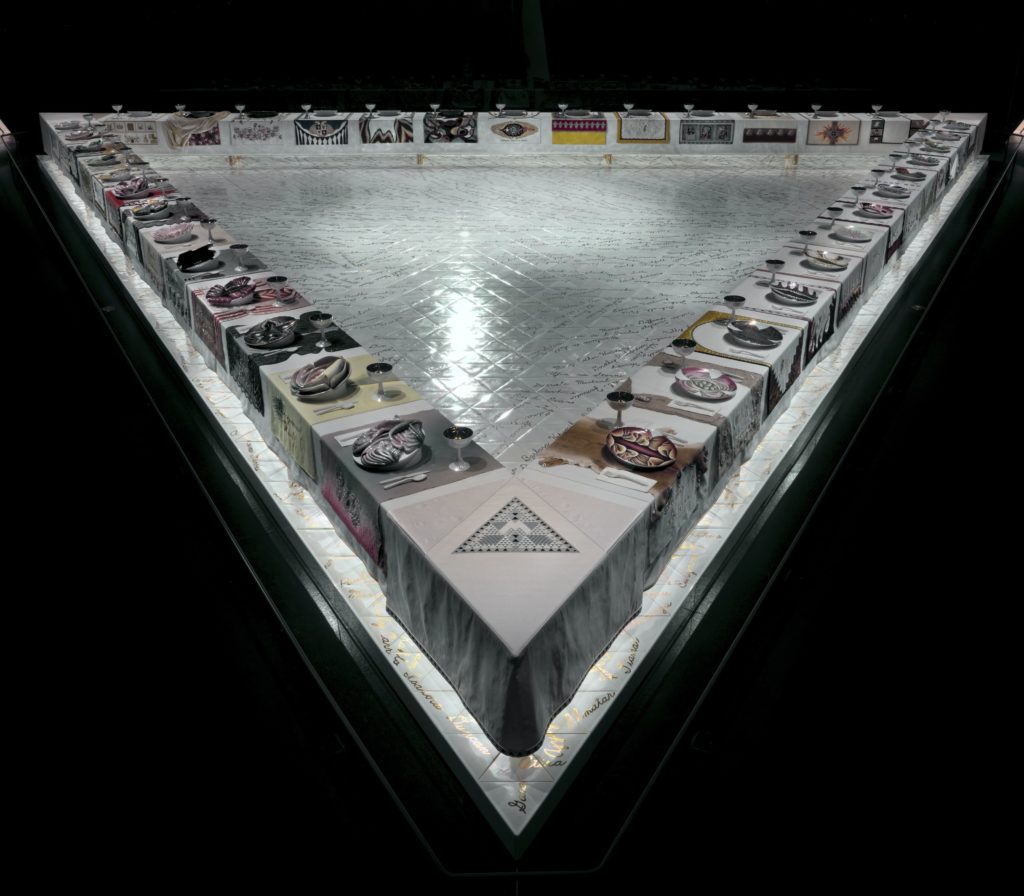
Chicago's most iconic piece The Dinner Party, fabricated in 1979, inverse the feminist art motion forever and is still discussed in fine art schools worldwide. The installation saw 39 place settings arranged forth with a triangular table for various famous women. Each setting was embroidered with the woman'southward name and had a ceramic plate of a flower intentionally manipulated to expect vaginal (as inspired by the Freudian readings of Georgia O'Keeffe'south flowers).
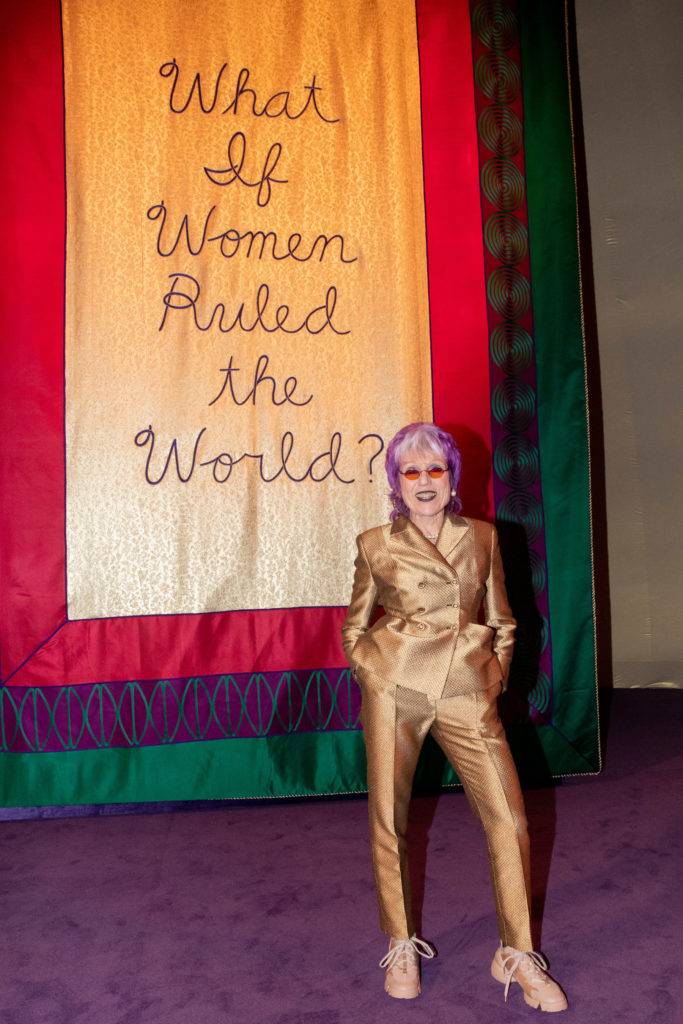
Still very much making waves, earlier this year Chicago played a primal office in Dior's January Haute Couture show in 2020. The show itself took place within the womb of a female deity and hanging within were behemothic 3 meter high embroidered banners all focused around Chicago'southward key question: What If Women Ruled the World?. The art and fashion worlds collided on this occasion and joined forces to remind the globe that at that place is nonetheless much to exist done for equality.
Chicago is a fierce artist who throughout her l year career has historic women as sexual beings, creators, mothers and leaders. Without Chicago, the feminist fine art world would exist a very dissimilar identify.
Georgia O'Keeffe
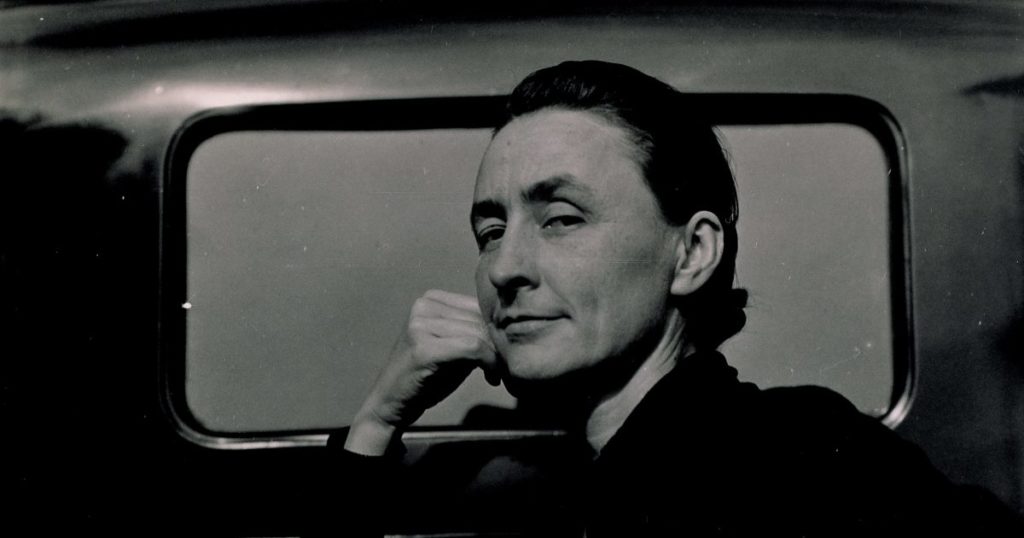
A personal favorite of mine, Georgia O'Keeffe was an American creative person whose proper noun, for most people, conjures up the image of her close-upwardly blossom paintings. She is often referred to as the "mother of American modernism", as O'Keeffe was one of the few women artists thrust into the New York gallery-sphere as early on as the 1920s. O'Keeffe was celebrated for her individualistic spirit, her lack of care for criticism (virtually of which was influenced by Freudian readings anyway), and her innovative delineation of grade.
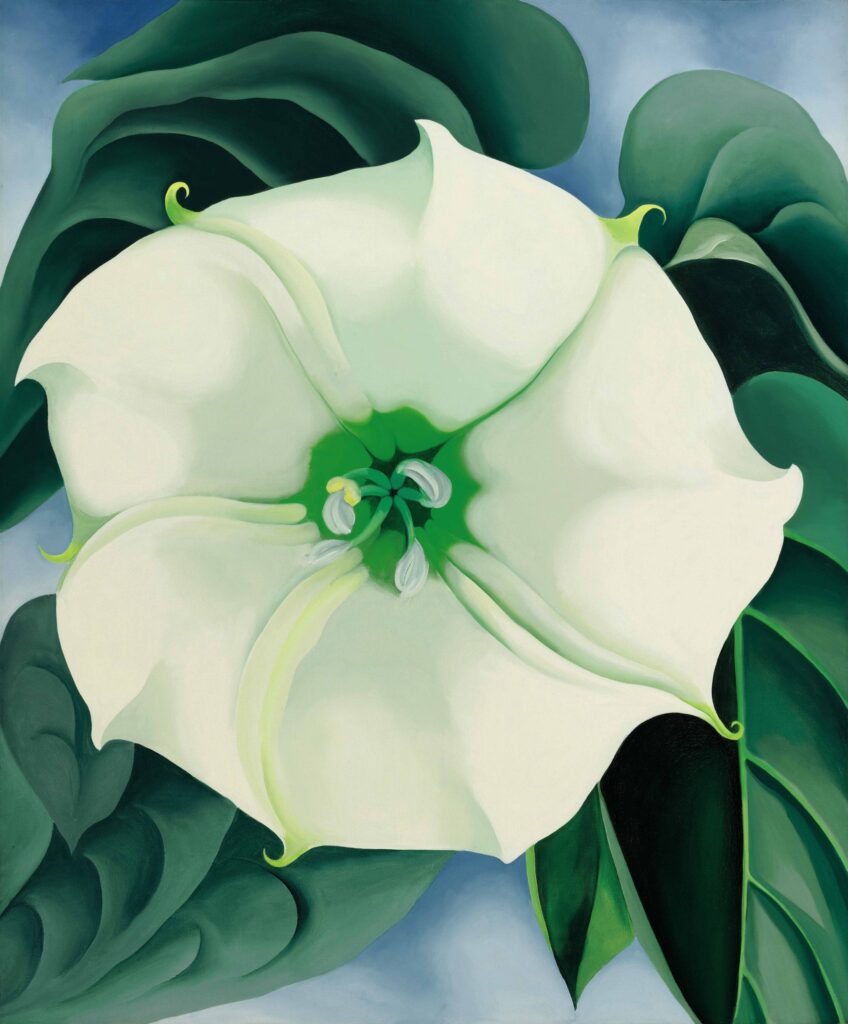
Even so, whilst O'Keeffe's contemporaries praised her piece of work for her apparent inclusion of sensual, female imagery in her piece of work, O'Keeffe refused to join the feminist fine art movement or cooperate with any "whatsoever women" projects. She hated being called a "woman creative person" and famously was angered by her inclusion in Chicago'south Dinner Party. Despite this, O'Keeffe is a feminist icon. Her fiery personality and iconic works have influenced generations of feminist artists – regardless of whether she wanted them to, or not.
Frida Kahlo
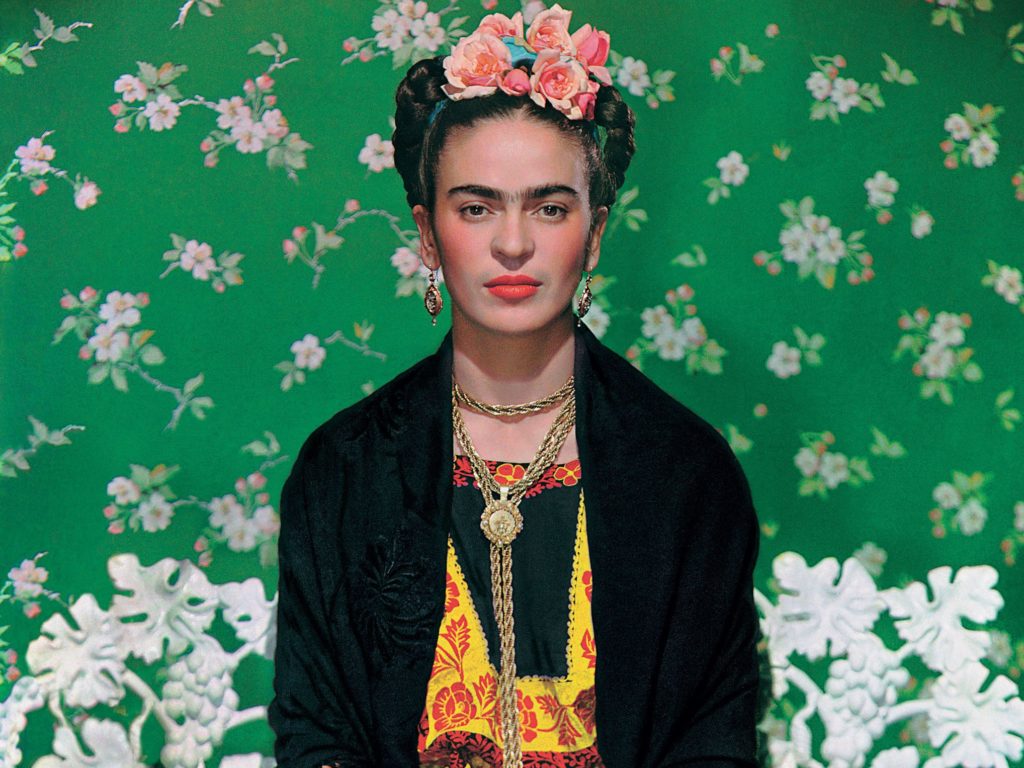
Yet another non-feminist feminist icon. Frida Kahlo is arguably 1 of the virtually iconic women of all fourth dimension – Kahlo'due south monobrow and flower crown donning image is seen everywhere: on tote bags, stationary, clothes and even air fresheners, you certainly don't have to know the art to know the woman.
Born in Mexico, Frida Kahlo worked alongside her hubby and fellow creative person Diego Rivera at a time before the term "feminist fine art" was even coined. And nevertheless, Kahlo'south evocative, heart wrenchingly raw and deeply personal self-portraits are retrospectively seen as feminist as the artist led the way for women to present their bodies, their pain and their frustrations as art.
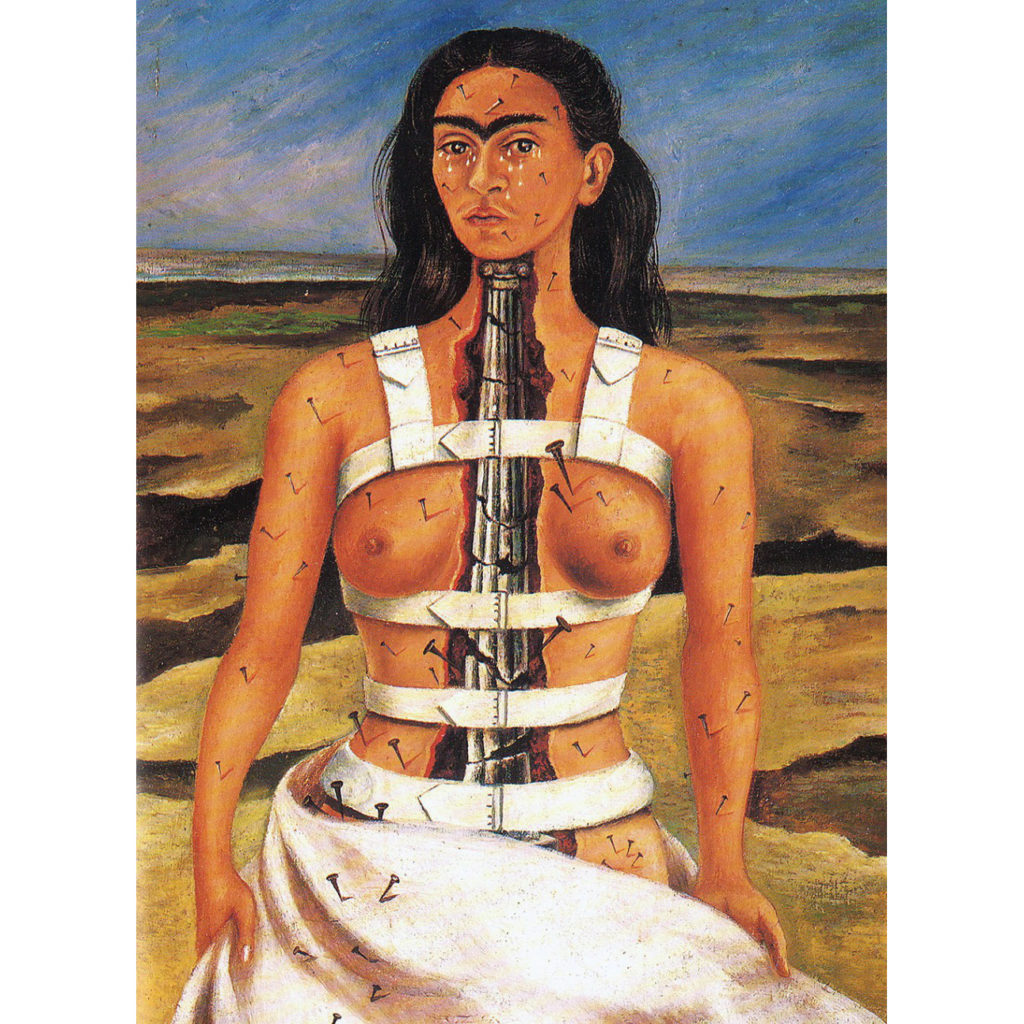
Kahlo'southward life was filled with pain, loss and anguish, and these all inform her piece of work. At the historic period of 18 Kahlo was involved in a horrific tram accident in Mexico. The tram came off the tracks, and in the process, sent a handrail though her back and out of her pelvis.
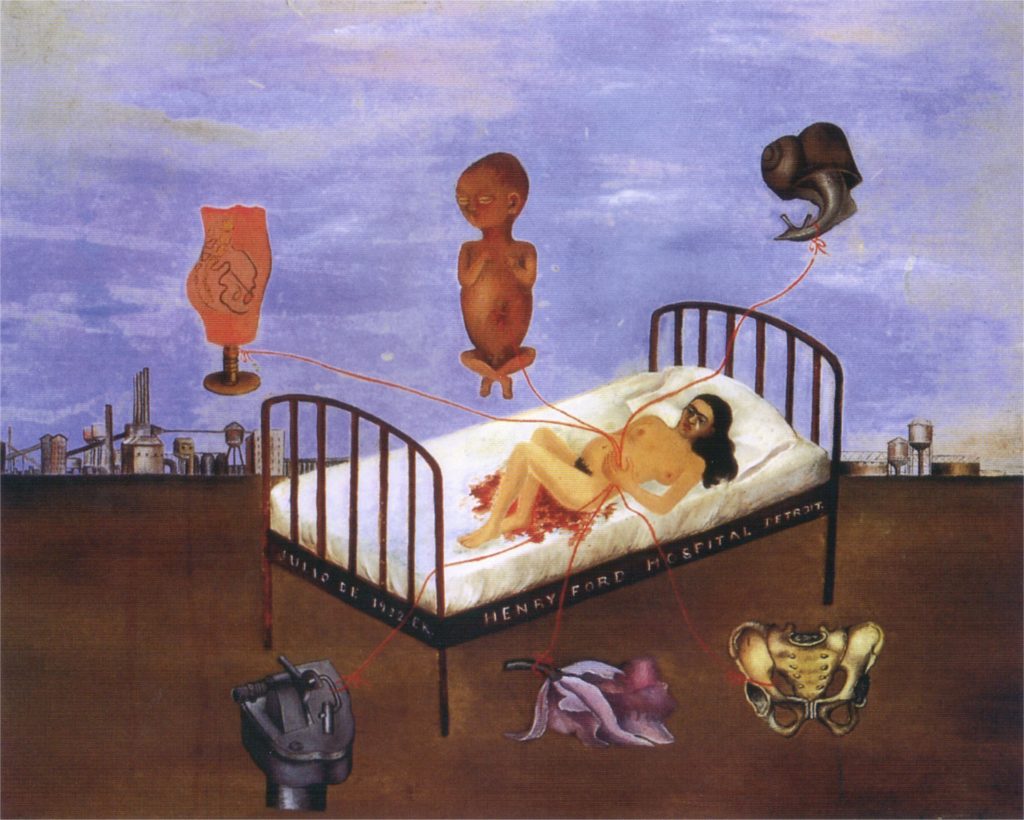
The crash besides irreparably damaged her womb and ability to give nascency. This led Kahlo into a life filled with surgeries, hospitals, recoveries and isolation. Each self-portrait, which often include images of foetuses or bandages, are informed by her struggle, and highlight the very personal problems she was faced with on a daily basis. It is her honesty, confidence and uniqueness that has made her a feminist icon for so many.
Cindy Sherman
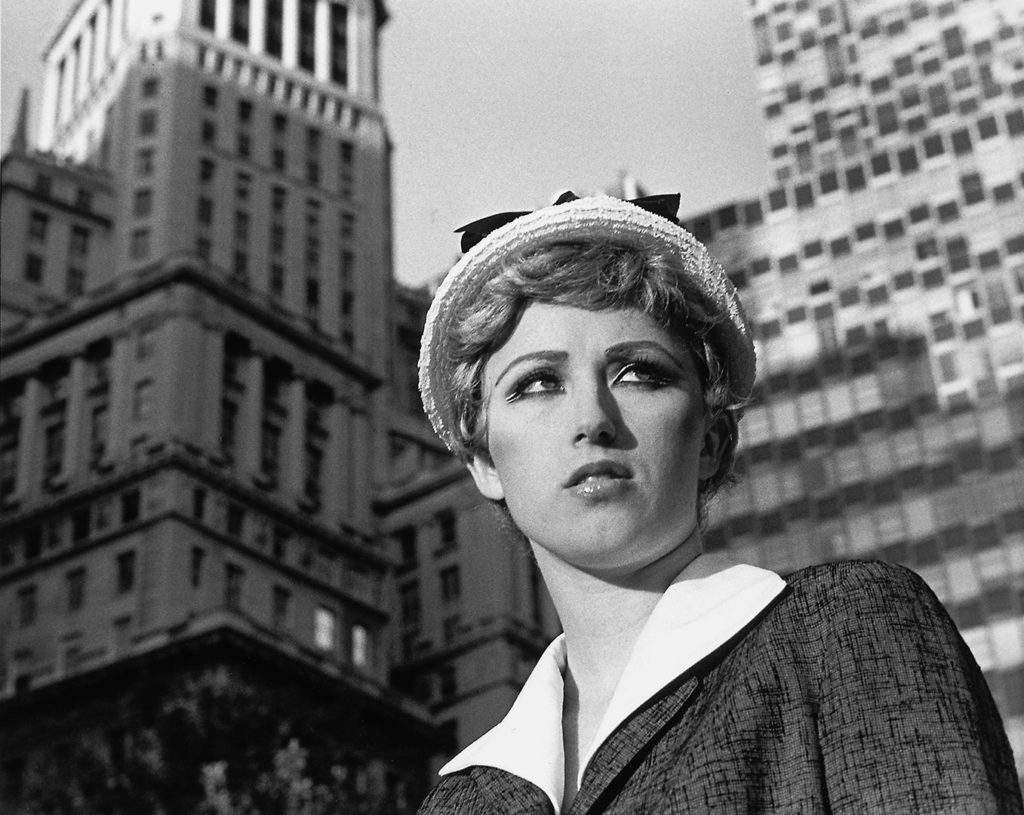
Cindy Sherman is an American photographer and film director who has become best known for her conceptual portraits. Sherman often works as her own model and has captured herself in a range of guises and personas which are at once amusing and disturbing, distasteful and impactful. Her work somehow flits between beingness simple photography, and documented performance fine art.

Working since the 1970s, the lensman frequently toys with female stereotypes just, much similar O'Keeffe and Kahlo, Sherman has never outrightly said she'due south a feminist artist, preferring to let her viewers to come up to their own conclusions. She one time said:
The work is what it is and hopefully information technology's seen as feminist work, or feminist-brash work… But I'1000 non going to go around espousing theoretical bullshit about feminist stuff.
Betsy Bern, Interview, Studio: Cindy Sherman, Tate Modern, 1 Jun 2003.
Ana Mendieta
Ana Mendieta is one of the near famous feminist functioning artists, as well every bit one of the near controversial. Mendieta was a Cuban-American artist whose work oftentimes dealt with violence against women, sexual assault and the notion of female beauty. Her piece of work was gaining attention even before she left college, with performances such as Untitled (Facial Hair Transplants) (1972), in which she transferred the facial hair of a male colleague onto her own face up. This series has remained pop and was included in the Barbican's recent exhibition surrounding the concepts and representation of Masculinity.
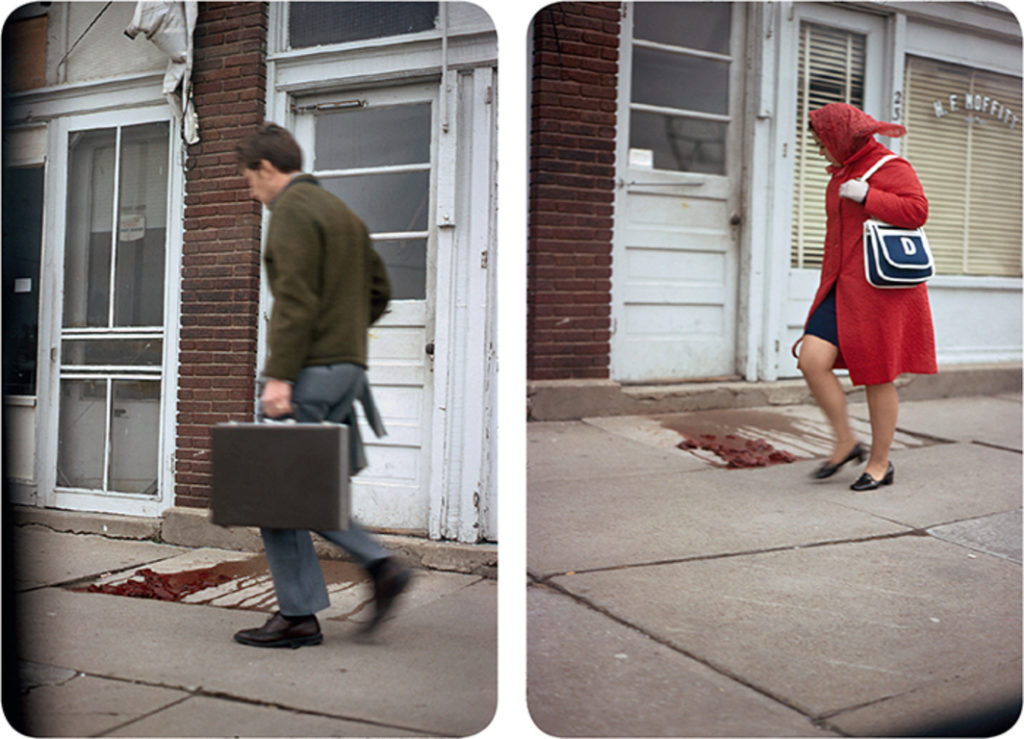
1 year after the playful photographs, Mendieta began to focus on more serious topics. The murder and a rape of young nursing educatee Sarah Ann Ottens in 1973 provoked Mendieta to produce some of her almost provocative works, such as Rape Scene, Rape Performance and Moffitt Building Piece. Each piece of work is meant to disturb and disquiet the viewer, to provoke uncomfortable feelings about the nature of violence towards women, and how nosotros reply to it. Mendietta created works that were powerful and poignant, drawing much needed attention to the plight of women across the world who felt their voices were not heard, or fifty-fifty worse, disbelieved, on matters such every bit violence.
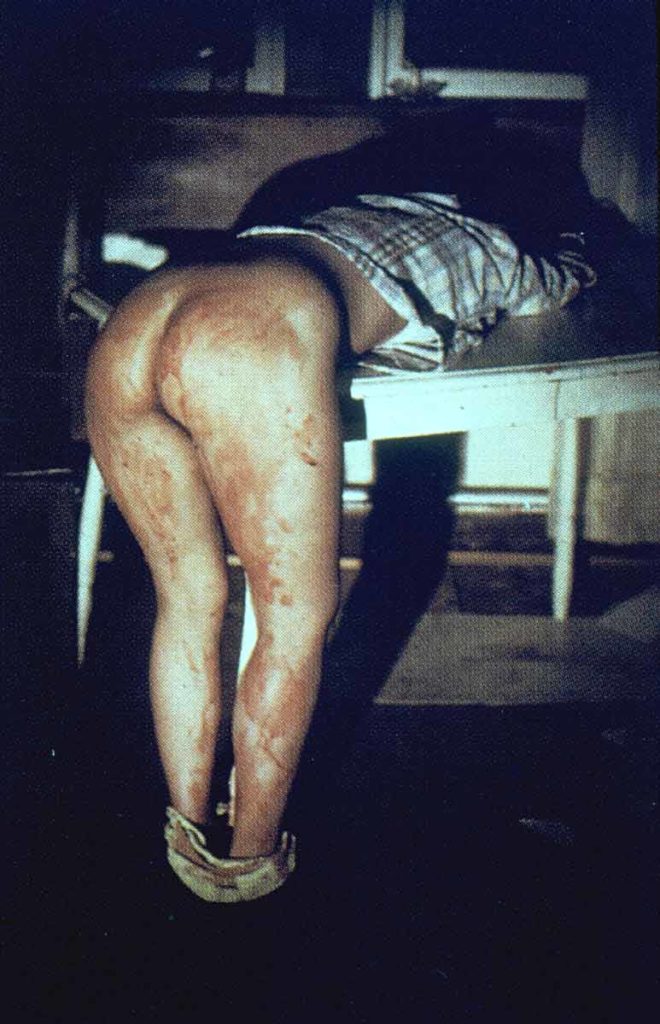
The fact that Mendieta was then moved by stories of violence against women makes her own expiry even more than distressing. In the early hours of the September 8, 1985, Mendieta had – to borrow the words her husband Andre had used when calling the police – "somehow gone out the window" of the 34th floor apartment in New York.
What really happened that nighttime no one will ever know, just since her death, many accusations have been thrown at her married man, minimalist sculptor Carl Andre. Andre was acquitted of any crime in 1988, just this has not stopped the development of an activist grouping called "WHERE IS ANA MENDIETA" from enervating justice and drawing attention to any scenario where the voice of Mendieta is not heard.
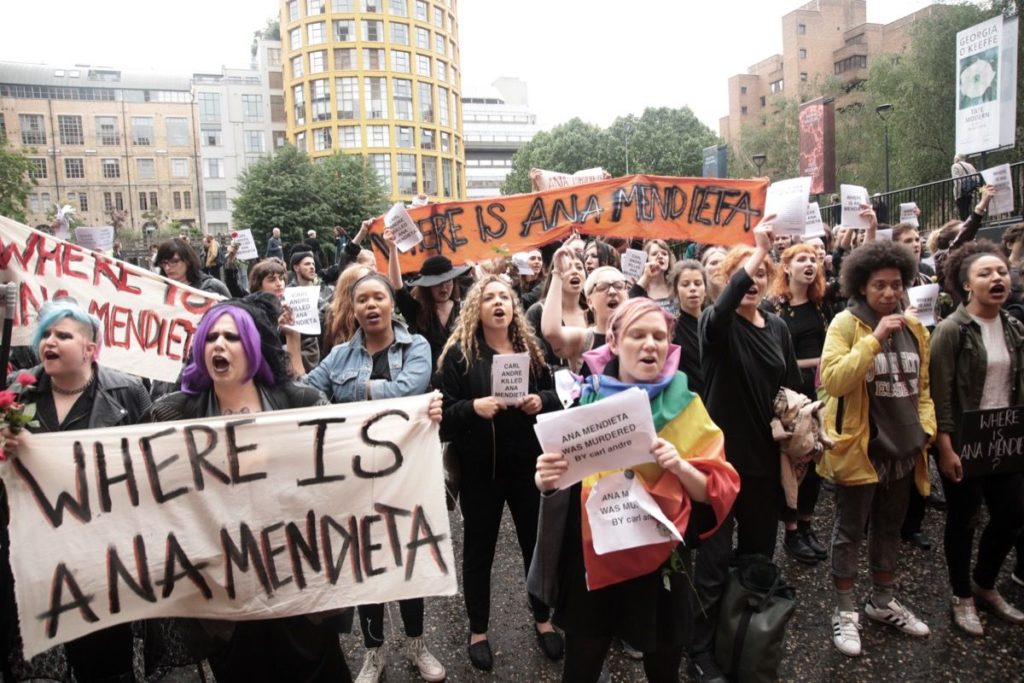
Nigh notably, the group gathered outside the Tate Modern in 2016 to vox its dissent over the inclusion of Andre'due south sculpture in the new Switch House installation, and the absence of works by Mendieta. For those convinced of Andre'southward guilt, this was the latest episode in an ongoing injustice, in which fine art's biggest institutions are complicit in lionizing a violent man and failing to fairly represent the work of women of color. Whilst living, Mendieta gave a phonation to women who needed information technology nearly, and it seems that even in death, she inspires others to do the same.
The artists listed here only serve to scratch the surface of the rich history of feminist artists and icons, just they will certainly go on to inspire the generations to come up.
Author'due south bio:
Josephine-May Bailey is an art historian, writer and aspiring curator who recently graduated from the Academy of Oxford where she studied History of Art. Currently living and working in London, Josephine regularly writes on the discipline of women artists and runs an Instagram account called @procrastinarting_ which aims to champion the works made by female identifying artists.
Source: https://www.dailyartmagazine.com/feminist-artists/
0 Response to "Early 20th Century Feminist Art Early 20th Century Female Art"
Post a Comment